
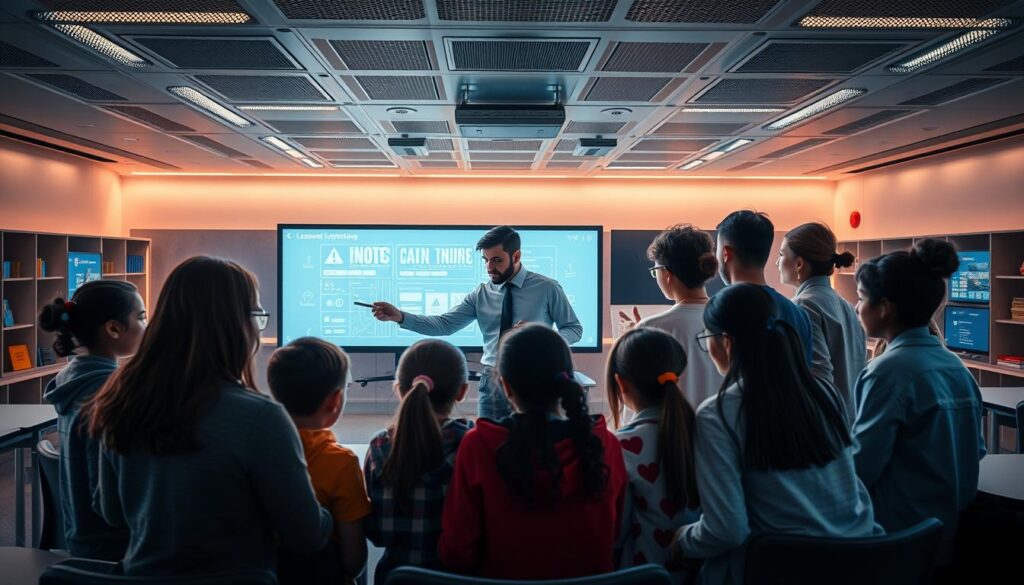
Imagine a classroom where every lesson fits your pace and interests. It’s not just a dream anymore. It’s changing how we learn and teach in schools.
Cristian Randieri says artificial intelligence is changing our lives, including education. AI-powered education is making learning personal. It’s making school better for everyone.
As we look ahead, adaptive learning technology is changing schools. Edtech is key in preparing for the future.
Key Takeaways
- Personalized learning is transforming the education sector.
- AI-powered education is making learning better.
- Adaptive learning technology is improving school results.
- Edtech is important for future jobs.
- AI is changing how we learn and teach.
Why AI is Revolutionizing Education as We Know It
AI is changing education in big ways. It’s moving away from the old way of teaching everyone the same thing. Now, education is more about what each student needs.
The Limitations of Traditional One-Size-Fits-All Teaching:
Old teaching methods don’t fit all students well. Some students get left behind. Others don’t get enough challenge.
Achievement Gaps in Conventional Education Systems
Traditional classrooms often have big gaps in learning. AI in education tries to close these gaps. It makes learning fit each student’s needs.
The Need for Personalized Approaches
Personalized learning really helps students do better. AI learning platforms help teachers make lessons just right for each student.
How AI Algorithms Understand Individual Learning Patterns
AI looks at lots of data to get to know how each student learns. Then, it makes personalized learning paths that fit each student’s way of learning.
The Powerful Shift from Teacher-Centered to Student-Centered Learning
With AI tutors and digital classrooms, learning is becoming more about the student. This makes learning more fun and effective.
A study by Ptatam et al. found 88% of students really value AI in learning. Many see AI as a helpful virtual tutor. This shows AI’s big role in changing education for the better.
AI in Education2025: Technologies Reshaping the Learning Landscape

AI is changing education a lot as we get closer to 2025. It’s not just a trend; it’s a big change in how we learn and teach. With 57% of higher education institutions focusing on AI in 2025, it’s clear AI in education is here to stay.
Adaptive Learning Platforms That Transform Student Engagement
Adaptive learning technology is leading this change. It gives students learning experiences that fit their needs. These systems change the difficulty of course materials based on how well a student does.
Real-World Success Stories from Leading Platforms
Platforms like DreamBox Learning and Curriculum Associates are making a big difference. For example, DreamBox Learning has helped a lot with math for K-8 students.
- Personalized learning paths
- Real-time progress tracking
- Enhanced student engagement
AI Tutors: The 24/7 Learning Companions
AI tutors are also a big deal in AI-powered education. These virtual helpers offer 24/7 support to students, helping with homework and studies.
How Virtual Assistants Complement Human Teachers
AI tutors help teachers by doing routine tasks. This lets teachers focus on more important and creative teaching. This teamwork between humans and AI is making learning better.
“The future of education lies in the synergy between human teachers and AI technologies.”
Predictive Analytics: Identifying Learning Gaps Before They Widen
Predictive analytics is a powerful tool for teachers. It helps find learning gaps early. By looking at student data, predictive models can spot students who might struggle.
| Predictive Analytics Benefits | Description |
|---|---|
| Early Intervention | Identify at-risk students before they fall behind |
| Personalized Support | Provide targeted support to students based on their needs |
Real-Time Feedback Systems That Accelerate Mastery
Real-time feedback is key for students to do well. AI systems can give instant feedback on assignments and quizzes. This helps students learn from their mistakes.
As we keep using AI in education, we see its big benefits. These technologies can make learning more inclusive, effective, and personal. By using adaptive learning, AI tutors, predictive analytics, and real-time feedback, we can change education for the better.
How AI is Transforming Classroom Dynamics and Teacher Effectiveness

AI is changing how teachers work. Teachers are no longer just knowledge dispensers. They now help students learn in new ways.
The Evolving Role of Educators in AI-Enhanced Environments
AI helps with grading and data. This lets teachers focus on teaching and mentoring. IDC and Workday say this is a big improvement.
From Knowledge Dispensers to Learning Facilitators
Teachers now guide students on their own paths. This is key for AI in higher education. It helps students think and solve problems better.
Creating Truly Inclusive Learning Spaces Through Personalization
AI makes learning spaces for everyone. It helps teachers see what each student needs. This way, teaching can be better for all.
Supporting Diverse Learning Needs and Styles
- Personalized learning plans tailored to individual students
- Real-time feedback systems that accelerate mastery
- Adaptive learning platforms that transform student engagement
Case Studies: Schools and Universities Leading the AI Education Revolution
Some schools are leading in AI use. They use AI for student success. This helps find and help students who might struggle.
“The future of education lies in embracing technology while preserving the human touch that is essential for student success.”
The Critical Challenges We Must Address in AI-Powered Education
AI in education brings many benefits. But, it also brings big challenges. These challenges could affect how well AI works and who gets to use it.
Navigating the Complex Terrain of Student Data Privacy
Keeping student data safe is a big issue. AI collects lots of data, which raises the risk of data breaches. We must find a way to use data for learning while keeping it safe.
Balancing Personalization with Protection
Schools need to protect student data well. This means using encryption and being open about data use. This way, we can trust AI without losing privacy.
Confronting and Eliminating Algorithmic Bias in Learning Systems
AI can be unfair if it’s trained on biased data. We need to make sure AI is fair for everyone. This means using diverse data to train AI.
Pronix Inc says we must make AI fair and open. This way, all students can learn equally well.
Bridging the Digital Divide: Ensuring No Student is Left Behind
Not all students have the tech they need for AI. We must make sure everyone has access to AI tools. This means investing in tech for schools.
| Strategy | Description | Benefit |
|---|---|---|
| Infrastructure Investment | Improving internet connectivity and device availability | Enhanced access to AI tools |
| Digital Literacy Programs | Training students and teachers to effectively use AI tools | Better utilization of AI resources |
| Low-Cost Solutions | Developing affordable AI-powered learning solutions | Increased accessibility for underprivileged students |
Preserving Human Connection in Increasingly Digital Classrooms
As classrooms go digital, we might lose human touch. We must make sure AI helps, not hurts, this connection. Teachers should use AI to support their teaching, not replace it.
For more insights on rethinking K-12 education in the age of AI, visit Online Learning Consortium.
Why Industry-Academia Partnerships Will Define Educational Success
As we move towards a more integrated AI-driven education system, industry-academia partnerships are becoming increasingly important. These collaborations are not only making learning better. They also prepare students for an AI-integrated workforce.
By working together, schools and industry leaders can make curricula that are relevant and effective. They align with the needs of the modern job market.
How Collaborative Innovation is Advancing Learning Analytics
Industry-academia partnerships are driving innovations in learning analytics. This lets educators understand student learning patterns better. They can then tailor their teaching methods.
For example, recent developments in AI are being used to create better learning analytics tools.
The Rise of AI-Verified Digital Credentials and Their Value
The emergence of AI-verified digital credentials is changing how we assess student achievement. These credentials offer a secure and transparent way to verify academic accomplishments. They are highly valued by employers.
Reimagining Assessment for the Digital Age
The traditional assessment methods are being reimagined to accommodate the capabilities of AI. This includes using AI to create personalized assessments. These can accurately measure a student’s knowledge and skills.
Preparing Students for an AI-Integrated Workforce
By integrating AI into education, we are not only making learning better. We are also preparing students for a workforce where AI is increasingly prevalent. This involves focusing on essential skills beyond technical proficiency.
Skills like critical thinking, creativity, and collaboration are key. They are important for success in an AI-driven world.
Essential Skills Beyond Technical Proficiency
As AI takes over routine and technical tasks, human skills are becoming more important. Skills like empathy, problem-solving, and leadership are growing in value. Our education systems must adapt to emphasize these skills.
Global Perspectives: How Different Regions are Embracing AI Education
Different regions around the world are adopting AI in education in unique ways. This reflects their cultural, economic, and educational contexts. This diversity offers valuable insights into the global implications of AI in education.
| Region | Approach to AI in Education | Key Features |
|---|---|---|
| North America | Integration of AI in existing curricula | Focus on STEM education, AI ethics |
| Europe | Emphasis on AI literacy across disciplines | Strong focus on data privacy, regulatory compliance |
| Asia | Rapid adoption of AI technologies | Investment in AI infrastructure, AI-driven education platforms |
Conclusion: Why Embracing AI in Education is Not Optional But Essential
Looking ahead, AI will change how we learn. Big names like Microsoft, Apple, and Google are using AI to improve education. AI helps with personalized learning, predicting how well students will do, and giving feedback automatically.
AI in schools is not just a trend. It’s a must for better learning places. AI helps make learning spaces that fit each student’s needs. As AI gets better, it’s becoming key to how we learn.
The future of AI in education looks bright. AI tools will keep changing how we teach and learn. By using these technologies, we can help students succeed more and make education better.
FAQ
How does AI personalize learning for students?
AI looks at how each student learns. It helps move from teacher to student focus. It also gives feedback and plans lessons just for them.
What are the benefits of AI in education?
AI makes learning fun and helps students do better. It meets different learning needs, helping every student get the help they need.
How do AI tutors improve student engagement?
AI tutors are always ready to help. They work with teachers to make learning better. This makes students more interested and motivated.
What is adaptive learning and how does it work?
Adaptive learning uses AI to change lessons based on what students need. It makes learning more effective for each student.
How can AI help identify learning gaps?
AI uses data to find where students might be struggling. Teachers can then help those students more.
What are the challenges of implementing AI in schools?
Schools face issues like keeping student data safe and avoiding unfair AI. They also need to make sure all students have access to technology.
How do universities use AI for academic success?
Universities use AI to help students learn better. They offer lessons tailored to each student and give feedback right away. This helps teachers find and fix learning gaps.
What are the best AI-powered learning platforms?
Top AI learning platforms offer lessons that change based on students’ needs. They also have AI tutors and give feedback right away. These tools make learning more engaging and effective.
How does AI support inclusive education?
AI helps all students by making learning personal and giving feedback. It supports different learning styles, helping every student get the help they need.
What are the privacy concerns with AI in education?
Keeping student data safe is very important with AI in schools. Schools must protect this data and keep it private.
How is AI transforming teacher roles?
AI changes how teachers teach. They now focus on helping students learn, making classrooms more inclusive and personal.
What skills do students need for an AI-driven future?
Students need skills like thinking critically and solving problems. These skills are important for working with AI in the future.
How can policymakers ensure ethical AI use in education?
Policymakers can make rules for using AI in schools. They should focus on fairness, data safety, and making sure all students have access to technology.